
In a world where you can swap your face with a celebrity’s in seconds using a smartphone app, the line between reality and digital fabrication has become incredibly thin. As we move through 2026, the technology behind “deepfakes”—AI-generated videos, images, and audio—has reached a level of realism that can fool even the most tech-savvy individuals.
The danger isn’t just about funny memes; it’s about misinformation, identity theft, and digital scams. If you can’t trust your eyes and ears, how do you know what’s real? Staying safe online now requires more than just a skeptical mind; it requires a specific set of tools and a keen eye for detail.
The Visual Red Flags: What to Look For
Even the most advanced AI in 2026 often leaves behind tiny “glitches” that the human brain can pick up on if it knows where to look. When you’re watching a video that seems a bit “off,” pay close attention to these specific areas:
-
- The Eyes and Blinking: For a long time, AI struggled to mimic the way humans blink. While modern deepfakes are better at this, they still often fail at “eye contact.” Look for a vacant stare or eyes that don’t seem to follow the action naturally. Also, check if the reflections in the pupils match the lighting of the room.
-
- The “Uncanny” Skin: Human skin has imperfections—pores, tiny hairs, and uneven tones. Deepfakes often make skin look too smooth, almost like plastic or a filtered Instagram photo. If the person looks like they are wearing a digital mask that doesn’t quite move with their facial muscles, it’s likely a fake.
-
- Edge Blurring: Pay attention to the space where the person’s face meets their hair or neck. In many deepfakes, you will see a slight “shimmer” or blurriness around the edges of the jawline or ears. This happens when the AI is trying to blend the fake face onto a real body.
-
- Unnatural Lighting: Does the shadow under the nose match the light coming from the window? AI often struggles to calculate complex lighting, resulting in shadows that look flat or appear in the wrong places.
Listening for the Truth: Audio Deepfakes
In 2026, “voice cloning” has become a preferred tool for scammers. You might get a call that sounds exactly like a friend or a family member asking for money. To spot an audio deepfake, listen for the following:
-
- Lack of Emotion: While the voice might sound like your friend, the “melody” of their speech—the ups and downs in pitch—might feel flat or robotic.
- Odd Phrasing: Listen for weird pauses in the middle of sentences or words that are pronounced with a strange accent that doesn’t fit the speaker.
- Background Silence: Real phone calls usually have some background noise (wind, traffic, or room hum). AI-generated audio is often eerily “clean” or contains strange, digital static that sounds like a computer processing data.
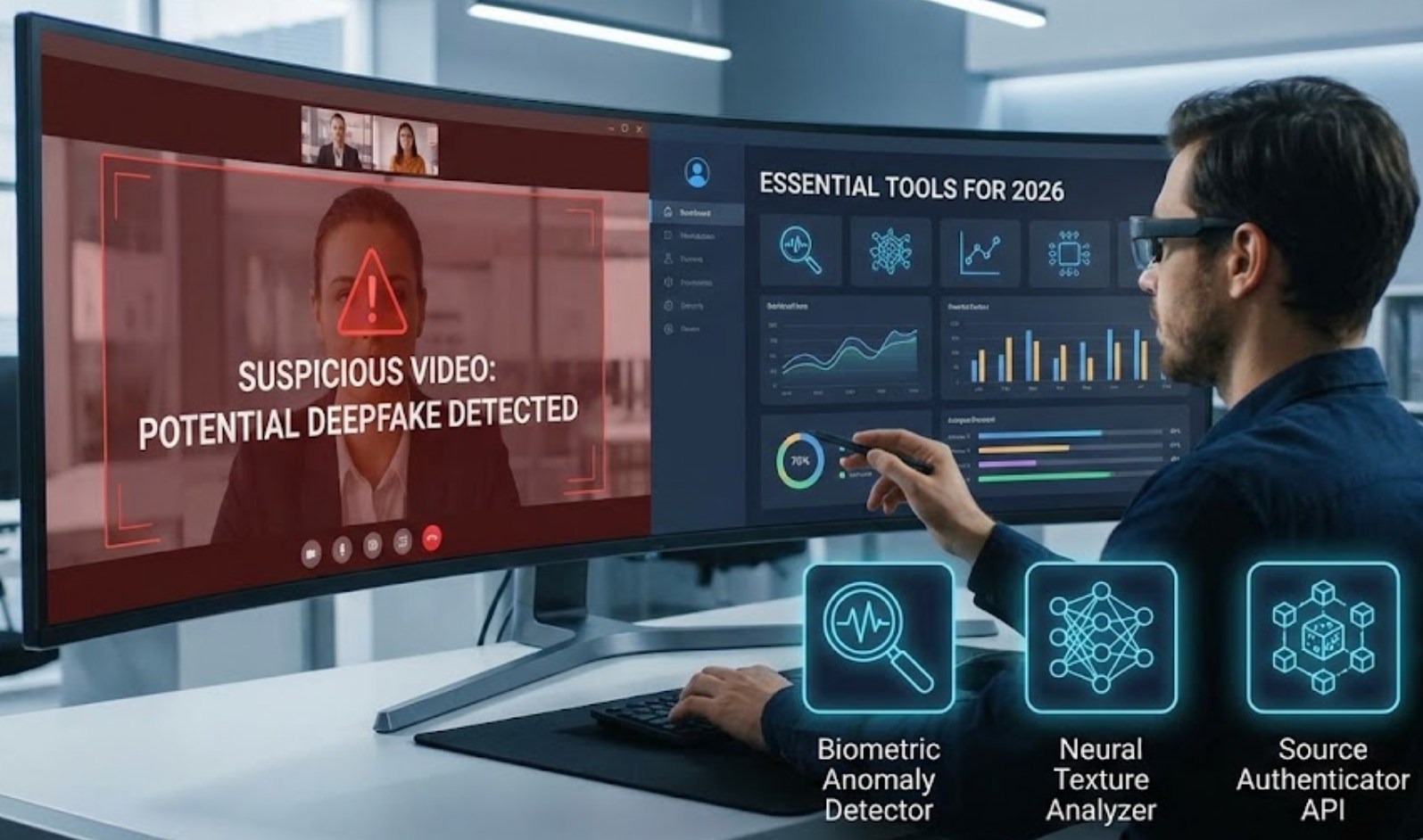
Your Digital Toolkit for 2026
Relying on your senses is a great start, but sometimes the technology is just too good. That’s where digital verification tools come in. Here are the essential tools you should have in your bookmarks this year:
1. Reverse Image and Video Search
If you see a suspicious video of a politician or influencer, don’t take it at face value. Use tools like Google Lens or TinEye. By uploading a screenshot of the video, you can see if the original, unedited footage exists elsewhere on the internet. Often, you’ll find that the “deepfake” is just a modified version of a real interview from three years ago.
2. Metadata Analyzers
Every digital file has a “hidden” layer of data called metadata. This tells you when the file was created, what camera was used, and if it was edited in software like Photoshop. Tools like Metapicz or specialized browser extensions can help you see if a photo has been “generated” rather than “captured.”
3. AI-Detection Websites
By 2026, several platforms have emerged that specialize in spotting synthetic media. Websites like Deepware or Reality Defender allow you to paste a link to a video, and their own AI will scan it for signs of manipulation. It’s essentially using “good AI” to catch “bad AI.”
4. Sifting Through the Context
Sometimes the best tool isn’t an app, but a strategy. Use the SIFT method:
-
- Stop: Don’t share it immediately.
-
- Investigate the source: Who posted this? Is it a verified news account or a random profile with zero followers?
-
- Find better coverage: Are reputable news outlets reporting the same thing?
-
- Trace claims to the original context: Where did this video actually come from?
Why This Matters
As we navigate the mid-2020s, the goal of deepfakes isn’t always to make you believe a lie; sometimes, it’s just to make you stop believing in the truth. When we can’t tell what’s real, we become cynical and easy to manipulate.
By using these tools and keeping your “digital guard” up, you aren’t just protecting yourself from being pranked; you are helping maintain the integrity of the internet. Before you hit “share” on that shocking video, take sixty seconds to check the edges, listen to the tone, and run a quick search. In 2026, those sixty seconds are the difference between being a victim and being informed.
