
The world of DIY technology has moved incredibly fast over the last few years. By 2026, the Raspberry Pi has evolved from a simple hobbyist board into a powerhouse capable of running complex artificial intelligence and high-speed automation. If you have a Raspberry Pi sitting in a drawer—or if you are looking for an excuse to buy the latest model—there has never been a better time to turn your home into a futuristic “smart” sanctuary.
Building your own home automation system isn’t just about convenience; it is about privacy and customization. Unlike off-the-shelf products that send your data to the cloud, a Raspberry Pi allows you to keep everything local. Here are the most exciting and practical projects to tackle this year.
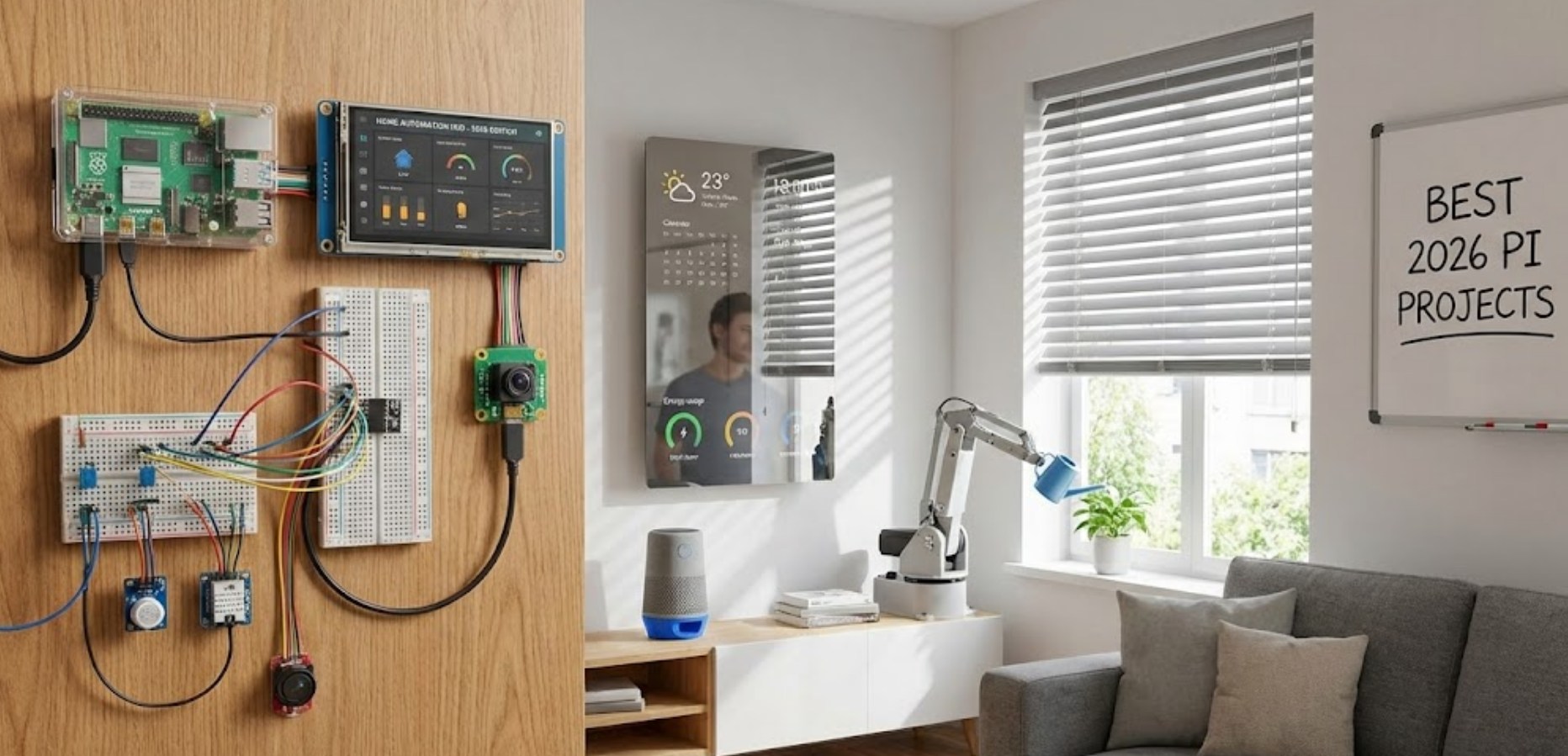
1. The AI-Enhanced Smart Mirror
The “Magic Mirror” has been a staple of the maker community for years, but in 2026, it is getting a major upgrade. Instead of just showing the time and weather, modern smart mirrors utilize local language models to act as a personal assistant. Imagine waking up, brushing your teeth, and having your mirror give you a verbal summary of your day without ever needing to check your phone.
To build this, you will need:
-
- A Raspberry Pi 5 (or the latest version available).
- A two-way glass mirror and a wooden frame.
- A thin monitor or display panel.
- A USB microphone and small speakers.
With software like MagicMirror², you can add modules that track your bus route, display your gym progress, or even use a camera module for facial recognition to show different schedules for different family members.
2. The Self-Sustaining Indoor Garden
If you struggle to keep plants alive, let a Raspberry Pi do the heavy lifting. Automated gardening is perfect for 2026 because sensors have become cheaper and more accurate. You can create a system that monitors the health of your indoor herbs or house plants 24/7.
A basic smart garden setup usually follows this logic:
-
- Moisture Sensors: These are pushed into the soil to check if the plant is thirsty.
- Light Control: The Pi turns on full-spectrum LED grow lights if the room doesn’t get enough natural sunlight.
- Water Pumps: A small relay switch allows the Pi to turn on a water pump for a few seconds when the soil gets too dry.
- Data Logging: You can view a dashboard on your phone showing the temperature, humidity, and “happiness” levels of your plants.
3. The Ultimate Private Security Hub
Privacy is a big deal in 2026. Instead of using cameras that upload footage to big tech servers, you can build a localized security hub. By using a Raspberry Pi and a software suite like Home Assistant or MotionEyeOS, you can manage your entire home security network from a single device.
You can set up your hub to do the following:
-
- Identify known family members using AI person-detection.
- Send a notification to your phone only when a stranger is at the door.
- Automatically block intrusive advertisements and tracking scripts across every device on your Wi-Fi (using Pi-hole).
- Store all video footage on an encrypted local drive rather than the cloud.
4. Smart Energy and Lighting Coordinator
We are all trying to be more eco-friendly, and a Raspberry Pi can help you cut down on electricity bills. By connecting your Pi to smart plugs and smart bulbs using Zigbee or Matter protocols, you can create “scenes” that respond to your movement.
For example, you could program a “Gaming Mode” that dims the lights and turns on your desktop speakers with a single voice command. More importantly, you can set the Pi to turn off every non-essential electronic device in the house once it detects that your phone has left the building. This prevents the “vampire power” draw from chargers and appliances that aren’t being used.
5. The Retro Media and Gaming Center
Home automation isn’t all about chores; it’s also about entertainment. While streaming services are everywhere, many people in 2026 are returning to “owning” their media. A Raspberry Pi can act as a Plex server to stream your movie collection to any TV in the house.
At the same time, you can install RetroPie to turn your automation hub into a classic arcade. Since modern Pis are powerful enough to emulate consoles up to the sixth generation, you can have a library of thousands of games ready to play at a moment’s notice.
Why Start Now?
The beauty of the Raspberry Pi is that it grows with you. You might start by just making a light turn on and off, but within a few weeks, you’ll find yourself writing scripts to automate your entire morning routine.
Working on these projects teaches you more than just how to plug in wires. You learn about Linux, Python programming, and networking—skills that are incredibly valuable in the modern world. In 2026, the best home isn’t the one you bought from a store; it’s the one you programmed yourself. Grab a breadboard, some jumper wires, and your Pi, and start building the future today.
