
The job market of 2026 looks very different from what our parents experienced. Gone are the days of printing out fifty copies of a resume and walking door-to-door to hand them to managers. Today, the first person—or rather, the first thing—that reads your resume isn’t a human at all. It is a piece of software known as an Applicant Tracking System (ATS).
By 2026, these systems have become incredibly advanced. They don’t just look for specific words; they use artificial intelligence to understand the context of your experience. If you want to land that dream internship or your first part-time job, you need to know how to use AI to your advantage to make sure your resume actually reaches a human’s desk.
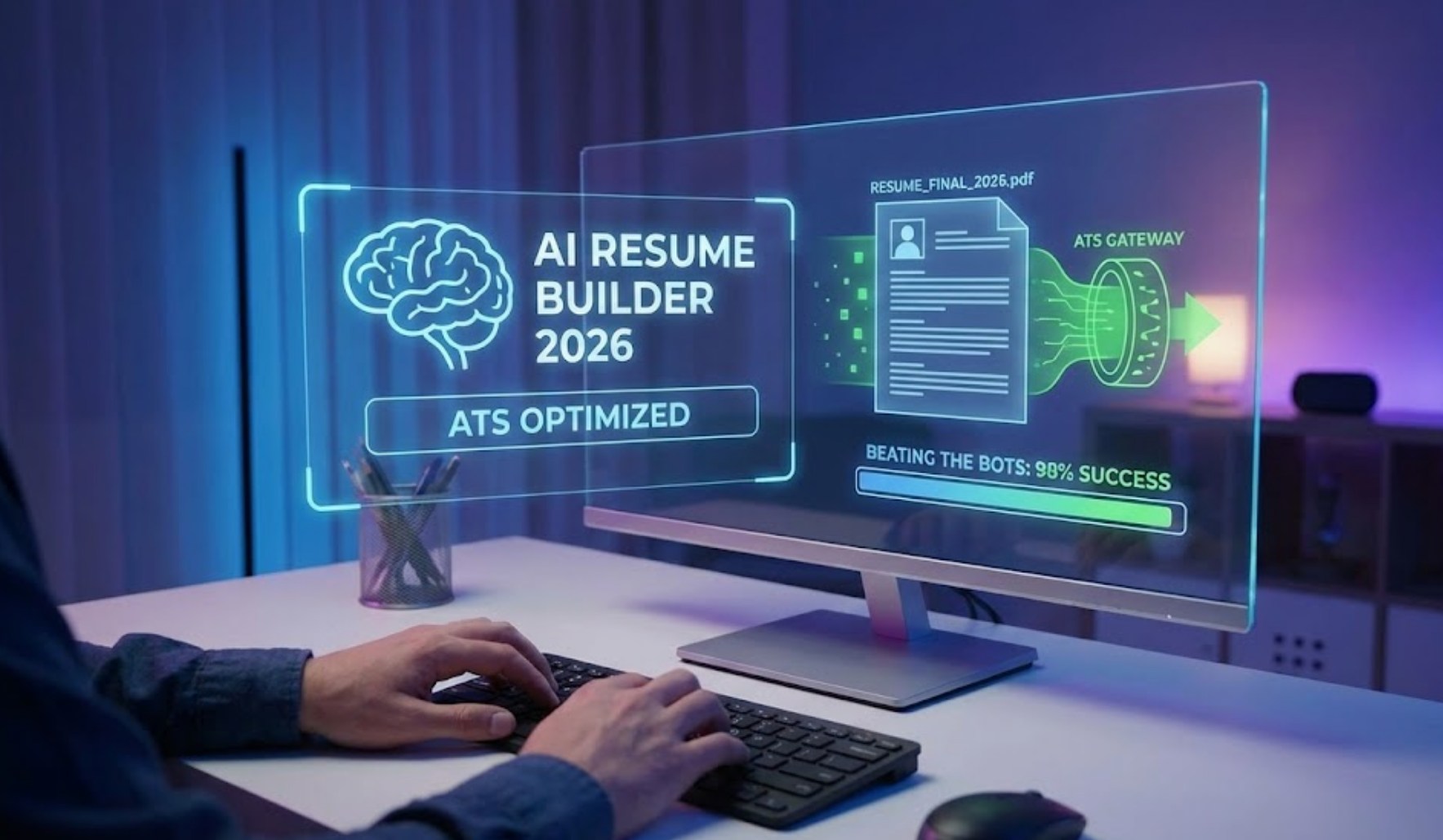
Understanding the Digital Gatekeeper
An ATS acts like a high-tech filter. When a company posts a job opening, they might receive hundreds or even thousands of applications. No human resources department has the time to read all of them. The ATS scans every document, ranks the candidates based on how well they match the job description, and discards the ones that don’t fit.
In 2026, these systems are powered by “Semantic Search.” This means the computer understands that if a job asks for “team leadership,” and your resume says you were the “captain of the debate team,” those two things are related. However, you still need to be strategic.
Step 1: Using AI to Research the Role
Before you write a single word, you need to understand what the employer wants. You can use AI tools like ChatGPT or specialized career bots to analyze job descriptions.
-
- Paste the job description into an AI tool.
- Ask the AI: “What are the top five most important skills and three personality traits this employer is looking for?”
- Identify the ‘hard skills’ (like Python coding or social media management) and ‘soft skills’ (like communication or problem-solving).
By doing this, you aren’t guessing what matters. You are using technology to find the exact “answers” the ATS is looking for.
Step 2: Drafting Content with a Human Heart
Once you have your list of keywords, it is time to write. While it is tempting to let an AI write the entire resume for you, that is a mistake. In 2026, recruiters use “AI detectors” just as much as students use AI writers. If your resume sounds like a robot wrote it, it will be tossed out.
Instead, use AI as a co-pilot. You can provide the AI with a list of your activities—like volunteering at a food bank, playing sports, or finishing a coding project—and ask it to “bullet point these experiences using strong action verbs.”
Effective resume bullets should follow the “XYZ Formula”:
-
- Accomplished [X] as measured by [Y], by doing [Z].
-
- Example: “Increased social media engagement by 20% over three months by creating a weekly video series for the local animal shelter.”
Step 3: Formatting for Modern Scanners
The most common reason resumes get rejected by the ATS isn’t a lack of skill; it’s bad formatting. If the computer can’t read the file, it can’t rank you. By 2026, simple is still better.
Follow these formatting rules to stay safe:
-
- Stick to standard fonts: Use clean fonts like Arial, Calibri, or Roboto. Avoid fancy cursive fonts that look “pretty” but confuse the software.
- Avoid graphics and charts: While a progress bar showing your “80% proficiency in Photoshop” looks cool to a human, it looks like gibberish to an ATS.
- Use standard headings: Use simple titles like “Work Experience,” “Education,” and “Skills.” Do not try to be “creative” by calling your experience “My Journey.”
- Save as a PDF or Docx: Unless the job posting specifically asks for something else, these are the only two formats you should trust.
Step 4: The Final Polish
After you have your draft, use an AI “Resume Checker” tool. These tools act as a practice run for the real ATS. They will give you a score from 1 to 100 based on how well your resume matches the job you want. If your score is low, the tool will tell you exactly which keywords you are missing.
However, the final step is the most important: Read it out loud. If a sentence sounds awkward or robotic, change it. In 2026, the goal is to use AI to get past the computer so that a human eventually falls in love with your story.
Staying Honest in the Age of AI
It can be tempting to use AI to exaggerate your skills. You might think, “The AI says I need to know Project Management, so I’ll just add that.” Don’t do it. In 2026, background checks and skill assessments are faster than ever. If you get past the ATS but can’t do the work during the interview, you’ve wasted everyone’s time—including your own.
Using AI to build a resume isn’t about “cheating” the system. It is about learning the language of the modern world. By combining the speed of technology with your unique personal experiences, you create a resume that doesn’t just beat the machine—it proves you are the best person for the job.
