
In the early days of the internet, using a Virtual Private Network (VPN) was something only high-level programmers or people working in top-secret government jobs did. Back then, simply hiding your IP address and encrypting your data was considered cutting-edge. But fast forward to 2026, and the digital world has changed. The “bad actors” online—hackers, data brokers, and intrusive advertisers—have become much smarter.
Today, standard encryption is the bare minimum. It’s like having a lock on your front door; it’s necessary, but it won’t stop a sophisticated intruder who knows how to climb through a window or pick a lock. For anyone who spends a lot of time gaming, streaming, or just browsing the web, being “tech-savvy” now means looking for features that go way beyond the basics.
If you want to stay ahead of the curve this year, here are five advanced VPN features that transform a simple privacy tool into a digital fortress.
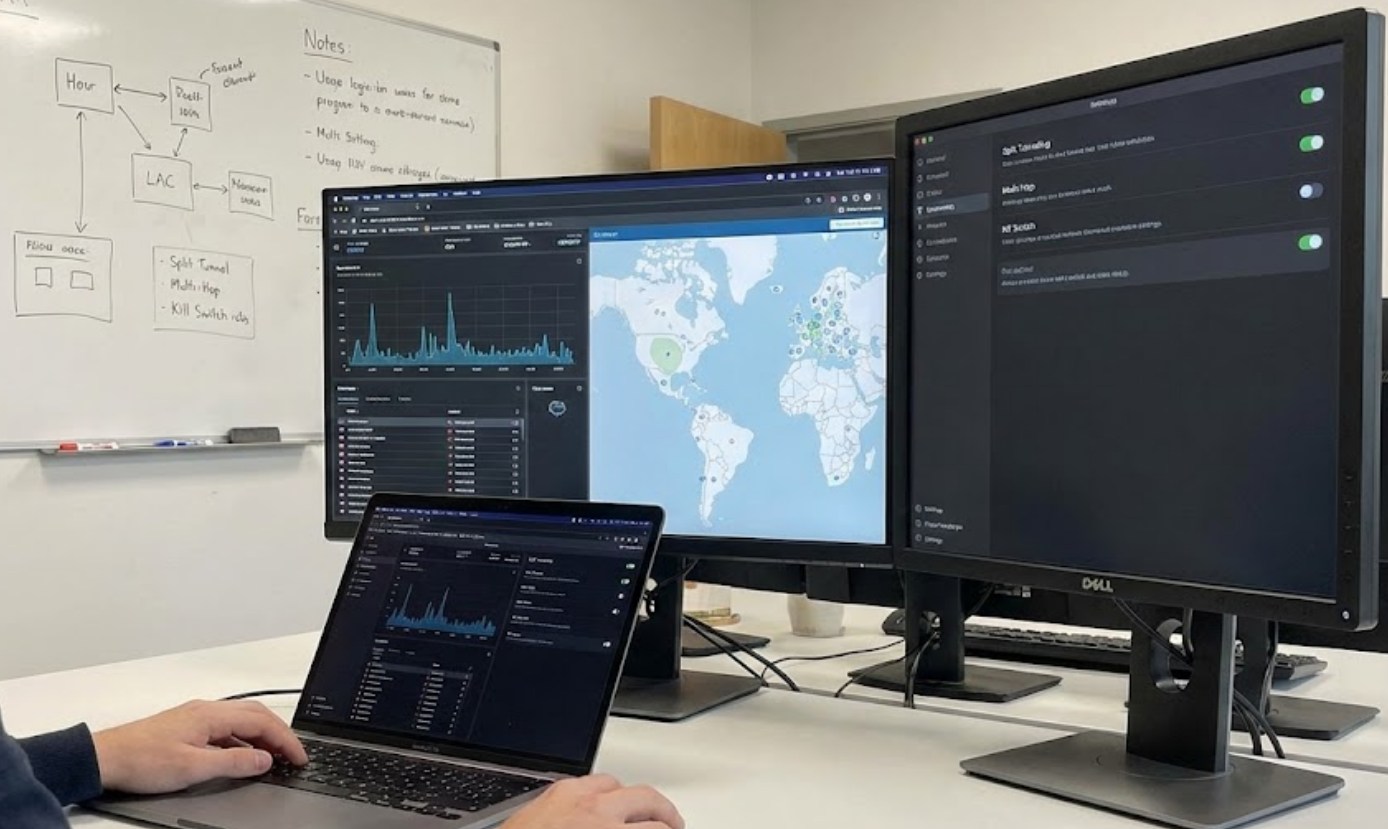
1. Multi-Hop (Double VPN)
Think of a standard VPN as a single tunnel. Your data enters one end in your bedroom and pops out in another city, like Chicago or London. This is great, but if someone is dedicated enough, they might be able to trace that single tunnel back to you.
Multi-Hop, often called Double VPN, adds a second layer of mystery. Instead of your data going through one server, it gets routed through two different servers in two different locations—often in two different countries—before it reaches its final destination.
-
- How it works: Your data is encrypted on your device, sent to Server A (let’s say in Switzerland), encrypted again, and then sent to Server B (perhaps in Iceland).
- The Benefit: Even if a hacker managed to compromise the second server, they would only see the IP address of the first server, not your actual home address.
- Best For: Journalists, activists, or anyone who is super serious about making sure their digital footprint is impossible to follow.
2. Split Tunneling: The Ultimate Multitasker
One of the biggest complaints people used to have about VPNs was that they slowed down everything. If you wanted to watch a movie on a UK server to see a different library, your local food delivery app might think you’re actually in London and refuse to show you the pizza place down the street.
Split Tunneling solves this by letting you choose which apps go through the VPN and which apps use your regular, “naked” internet connection.
-
- The Privacy Lane: You can set your web browser and file-sharing apps to use the VPN tunnel to keep your history and downloads private.
- The Local Lane: You can set your video games or banking apps to stay on your local connection. This reduces “ping” or lag in games and ensures your bank doesn’t freeze your account because it thinks you’re logging in from halfway across the world.
- Battery Savings: Because the VPN doesn’t have to encrypt every single piece of data leaving your phone, it saves battery life and processing power.
3. Obfuscated Servers (Stealth Mode)
Have you ever noticed that some networks—like the one at a library, school, or a very strict coffee shop—actually block VPNs? They use “Deep Packet Inspection” (DPI) to see that your data is encrypted and immediately stop it from passing through.
Obfuscation is like a cloaking device for your VPN traffic. It reshapes your data packets so they don’t look like VPN data at all. Instead, it makes your connection look like regular, everyday web traffic (HTTPS).
-
- Why you need it: It helps you get around firewalls that are designed to stop VPNs.
- Privacy boost: It prevents your Internet Service Provider (ISP) from even knowing that you are using a VPN. While your ISP can’t see what you’re doing when you use a VPN, they usually know that you’re using one. Obfuscation hides that fact entirely.
4. RAM-Only Servers (Stateless Browsing)
In the past, VPN servers worked like your laptop; they had hard drives that stored data. Even if a VPN company had a “no-logs” policy, there was always a tiny risk that data could be stored on those hard drives temporarily. If a government seized the server, they might find remnants of user activity.
In 2026, the best VPNs have switched to RAM-only servers. RAM (Random Access Memory) is volatile, meaning it requires power to hold information.
-
- Total Erasure: Every time the server is turned off or rebooted, all the information on it is instantly and permanently wiped out. There are no hard drives to steal and no “leftover” data to find.
-
- Security from the Inside: If a hacker tried to install a malicious program on the server, it would be deleted the moment the server did its routine daily restart. It’s the digital equivalent of a self-cleaning room.
5. Integrated Threat Protection and Ad-Blocking
Modern VPNs are moving toward becoming “all-in-one” security suites. You might have noticed that the internet has become a minefield of “malvertising” (ads that carry viruses) and trackers that follow you from one website to another.
Advanced VPNs now include Threat Protection features that work at the network level.
-
- Stopping Trackers: It blocks the invisible scripts that websites use to build a profile on your shopping habits and personality.
- Blocking Malicious Sites: If you accidentally click a link in a “phishing” email, the VPN can recognize the site as a known threat and block the page before it even loads.
- Cleaner Browsing: By blocking ads at the server level, web pages actually load faster and look much cleaner. You don’t have to install five different browser extensions; the VPN handles it before the data even reaches your screen.
Why These Features Matter Now
You might be thinking, “I’m just a normal person, do I really need all this?” The reality is that the internet has become the place where we live our lives. We do our homework, talk to our friends, manage our money, and share our opinions online.
As we move further into 2026, the “standard” VPN is becoming a thing of the past. The tech-savvy user knows that privacy isn’t just about hiding; it’s about control. It’s about having the control to decide which apps use which connection, the control to ensure no data is ever saved on a disk, and the control to bypass unfair blocks on public networks.
When you look for a VPN provider this year, don’t just look for a low price or a fancy logo. Look under the hood. Check if they offer multi-hop, ask about their server hardware, and see if they have a “stealth” mode. In an era where data is more valuable than gold, these advanced features aren’t just “extras”—they are the tools you need to stay truly free in the digital world.
