
Starting a YouTube channel, a Twitch stream, or a podcast used to feel like you needed a Hollywood budget just to sound decent. Fast forward to 2026, and the landscape has completely shifted. You no longer need to drop a thousand dollars to get that “radio voice” everyone craves. In fact, some of the best-sounding content today is being produced on gear that costs less than a pair of high-end sneakers.
If you have been using a built-in laptop mic or a cheap headset, you know the struggle. Your voice sounds thin, there is a constant hiss in the background, and every time you move your chair, it sounds like an earthquake. This is where moving to an XLR setup changes everything.
Why Choose XLR Over USB?
Before we dive into the best mics, it is important to understand why XLR is the gold standard for creators. While USB microphones are convenient because they plug directly into your computer, XLR microphones offer a few major advantages:
-
- Durability: XLR mics are built like tanks. They don’t have internal computer chips that can go obsolete or fry easily.
- Upgradability: If you want to change your sound, you can just swap the mic and keep your cables and interface.
- Audio Control: Using an XLR mic requires an audio interface (a small box that connects the mic to your computer). This gives you physical knobs to control your volume and prevents that annoying “static” sound common in cheap USB ports.
The Top Budget Picks for 2026
Here are the best budget-friendly XLR microphones that are currently dominating the scene for new creators.
1. The Reliable All-Rounder: Audio-Technica AT2020 (2026 Edition)
The AT2020 has been a legend for years, and its latest iteration remains the king of the “entry-level” mountain. This is a condenser microphone, which means it is very sensitive and picks up a lot of detail. It’s perfect if you have a quiet room and want your voice to sound crisp and professional.
-
- Best for: Voiceovers, acoustic instruments, and singing.
- Pros: Incredible clarity for the price; very sleek design.
- Cons: Picks up background noise (like fans or loud keyboards) easily.
2. The Bedroom Producer’s Hero: Rode PodMic
If your recording space isn’t a professional studio—maybe it’s a bedroom with a loud PC or a noisy street outside—the Rode PodMic is your best friend. This is a dynamic microphone, meaning it is much better at ignoring sounds that aren’t right in front of it.
-
- Best for: Podcasting and noisy environments.
- Pros: Built-in pop filter (saves you money on accessories); heavy, premium feel.
- Cons: You need to stay close to the mic for the best sound.
3. The New Challenger: Maono PD400X
Maono has spent the last few years shaking up the industry by offering high-end features at half the price of big-name brands. The PD400X is a “hybrid” mic, but when used via XLR, it provides a deep, rich tone that rivals microphones three times its price.
-
- Best for: Streamers who want a “broadcast” sound.
- Pros: Excellent noise rejection; looks great on camera.
- Cons: The brand is newer, so long-term resale value might be lower.
What You Need to Make it Work
Buying the microphone is just the first step. To get the most out of an XLR setup, you need a few extra pieces of gear. Think of it like buying a gaming console; you still need the controller and the cables to actually play.
The Essential Checklist:
-
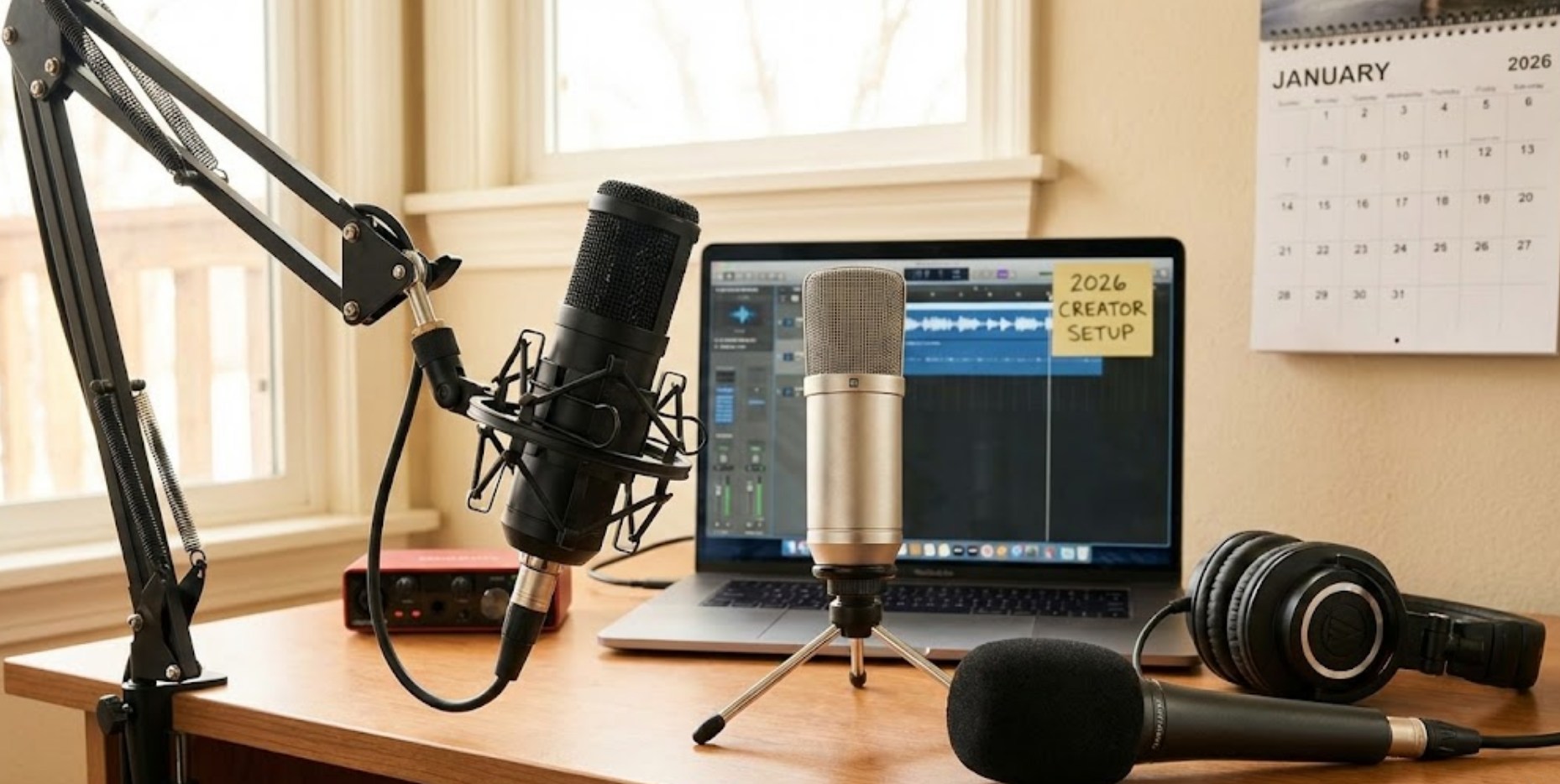
- An Audio Interface: This is the bridge between your mic and your computer. Look for brands like Focusrite or PreSonus for budget-friendly options.
- XLR Cable: Don’t buy the most expensive one; a standard $15 cable works perfectly.
- Boom Arm or Mic Stand: Holding a professional mic in your hand will create “handling noise,” so you’ll want it mounted.
- Pop Filter: This prevents those harsh “P” and “B” sounds from clipping your audio.
How to Choose the Right One for You
Choosing a microphone is personal because everyone’s voice is different. To make the right choice, ask yourself these three questions:
-
- Is my room loud? If yes, go with a Dynamic mic like the Rode PodMic.
- Am I recording music? If yes, a Condenser mic like the AT2020 will capture the high notes better.
- What is my total budget? Remember to save about $100 for your interface and cables.
Final Thoughts
In 2026, the barrier to entry for high-quality content has never been lower. You don’t need a professional studio to sound like a pro; you just need the right tools and a bit of practice. Any of the microphones listed above will provide a massive leap in quality over a standard headset or laptop mic.
The most important thing to remember is that while gear is fun, your content is what matters most. Grab a solid budget mic, set it up correctly, and start creating. Your audience will definitely hear the difference.
